

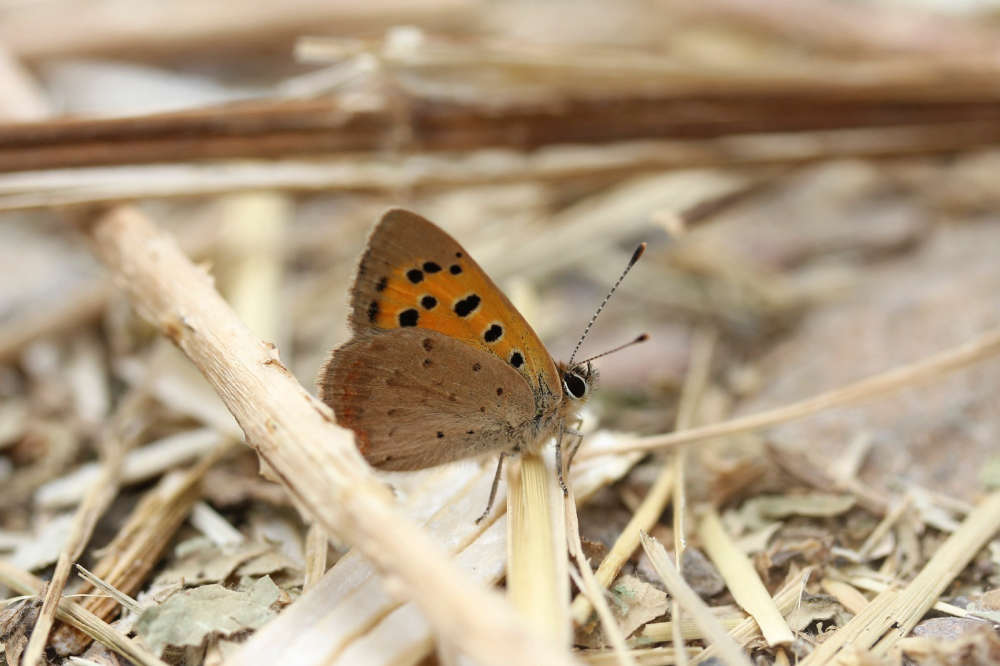
The results of Butterfly Conservation's 2026 Big Butterfly Count are in and show it was a very good summer for butterflies. But experts warn that despite a good year, what comes next could be dire...
With the Met Office confirming it ‘increasingly likely’ to be the hottest summer on record, August saw the UK's National Drought Group declare that more than 70% of England was officially in drought, with almost all of the UK experiencing drier than usual conditions.
As a result, the charity fears that the real cost of this summer's extreme weather may not be felt until next year, when this year's drought-stressed caterpillars should be emerging as adults.
Professor Richard Fox, Head of Science at Butterfly Conservation, said: "This has been one of the hottest, driest summers on record, and the figures certainly suggest that was good news for many of the widespread butterfly species monitored by the Count. In fact, it was the second-best year in the 16 year history of the Big Butterfly Count!
"Adult butterflies love hot, sunny weather for flying, feeding and breeding, and that's exactly why people saw so many this summer. But a good summer for adult butterflies is not the same as a good summer for butterfly populations.
“What matters far more is what's happening on the ground, to the butterflies’ caterpillar offspring and the plants they depend on. The very same weather that made it a good year for butterflies - lots of sunshine and very little rain - could mean we’re actually on course for a population crash, which could take years to recover from."
Butterfly Winners and Losers
During this year’s Big Butterfly Count, 101,565 participants recorded almost 1.4 million butterflies and moths across the UK.
Among individual species there were winners and losers. More species had above-average counts this summer than below-average. Holly Blue and Gatekeeper both had their best ever Big Butterfly Count results, and Small Copper its third best. Holly Blue abundance has increased by 42% over the 16 years of Big Butterfly Count and Small Copper has increased by 93%.
No species had its worst Big Butterfly Count in 2026, but it was the second-worst year for Small Tortoiseshell, which has now decreased by 66% since the Count began. Speckled Wood, Green-veined White and Ringlet, all species known to be sensitive to drought, were seen in below-average numbers and show declines of 44%, 54% and 39%, respectively, since 2011.
One of the standout stories was the Painted Lady, up 335% on last year, in what's been widely described as a ‘Painted Lady summer’. It was the second-best year for Painted Lady since the Big Butterfly Count started and its abundance has increased by 74% over that time. Painted Ladies undertake one of the most remarkable insect migrations in the world, arriving in Britain via a relay of several generations, each flying a leg of the journey from Africa, across the Sahara Desert and Mediterranean Sea, before reaching UK shores.
Small White topped the national table this year, with 281,634 recorded, ahead of Gatekeeper (211,029), Large White (190,295), Red Admiral (141,178) and Meadow Brown (134,335) rounding out the top five.
A difficult year ahead
Butterfly Conservation's greater concern lies not with this summer’s results, but with the impact of the extreme summer weather experienced across much of Britain on butterflies next year and in the longer term.
This year, many of the plants that caterpillars depend on had withered or died before the caterpillars had finished feeding on them, and the charity fears the impact on butterfly and moth populations will become fully apparent in 2027.
Professor Fox added: "Our real worry isn't this summer, it's what happens next. We’ve been here before and it’s not good; the extreme droughts in 1976 and 1995 had severe impacts on butterfly populations, with some species never fully recovering. And the major problem we have now is that 80% of the UK’s butterflies have declined since the 1970s, so many are already struggling for survival, without these extreme weather pressures.
“With increasingly hot, dry summers and droughts predicted to become more and more frequent due to climate breakdown, degraded habitats and already depleted butterfly populations, some species may be pushed further and faster towards extinction, which is a very sombre thought. They are, quite simply, less resilient to these events, which means we could be looking at very difficult years ahead.”
Three top tips to ‘drought-proof’ gardens for butterflies
Butterfly Conservation is calling on people across the UK to take three simple ‘drought-proofing’ actions in their gardens and outdoor spaces this winter to help caterpillars, and in turn, butterflies and moths:
1. Plant more trees and shrubs
Holly, Ivy and Buckthorn are among the best choices for butterflies. Holly and Ivy together support garden favourite the Holly Blue, while flowering Ivy is also a valuable late-season nectar source for the colourful Red Admiral and charming Comma, as well as a host of bees, moths and hoverflies.
Buckthorns are the food source for Brimstone caterpillars, whose sunshine-yellow butterflies often herald the start of spring.
Species such as oaks, Hawthorn, birches, apples and willows all provide homes for caterpillars of a wide array of native moths.
All are widely available, low-maintenance, and provide shade and shelter from heatwaves as well as food for caterpillars and adult insects. Their deep roots and dense structure also help them cope with dry conditions once established.
2. Set up water butts
Collecting rainwater through autumn and winter, when it's plentiful, means there's a reserve to fall back on for key plants during a dry summer.
With numerous hosepipe bans enforced in 2026, preparing now could be the key to helping butterflies next year when the hot, dry weather is predicted to return.
3. Leave patches of grass to grow long
Left uncut, grass develops deeper roots and stays green for longer than a closely mown lawn, which browns off quickly in a drought. Longer grass also provides caterpillar foodplants for species like Speckled Wood, Meadow Brown and Gatekeeper, and creates cooler, damper conditions for butterflies to seek refuge during heatwaves.
Research by Butterfly Conservation scientists showed that gardens with a patch of long grass saw up to 93% more butterflies and a wider range of species, so this is one free and simple change that could really help butterflies when they need it most.
The Big Butterfly Count will return in 2027, when citizen scientists across the UK will be more important than ever before to help discover the true impact of this summer’s extreme weather.
Mark your diary now… Big Butterfly Count 2027 - Friday 9 July - Sunday 1 August.
For more butterfly friendly gardening tips visit www.butterfly-conservation.org
BIG BUTTERFLY COUNT RESULTS 2026 - UK TOTALS
|
|
Species |
Total count |
Change from 2025 (%)* |
Change from average year (%)* |
Trend 2011-2026 (% change)* |
|
1. |
Small White |
281,634 |
-13 |
32 |
12 |
|
2. |
Gatekeeper |
211,029 |
17 |
50 |
-7 |
|
3. |
Large White |
190,295 |
-39 |
19 |
46 |
|
4. |
Red Admiral |
141,178 |
-13 |
39 |
63 |
|
5. |
Meadow Brown |
134,335 |
-6 |
-15 |
-19 |
|
6. |
Painted Lady |
85,508 |
335 |
161 |
74 |
|
7. |
Common Blue |
54,430 |
17 |
-16 |
-52 |
|
8. |
Peacock |
54,414 |
-3 |
39 |
3 |
|
9. |
Holly Blue |
43,849 |
221 |
128 |
42 |
|
10. |
Small Tortoiseshell |
33,123 |
-30 |
-53 |
-66 |
|
11. |
Speckled Wood |
31,512 |
-17 |
-28 |
-44 |
|
12. |
Green-veined White |
27,877 |
-22 |
-13 |
-54 |
|
13. |
Comma |
23,220 |
-33 |
-2 |
-3 |
|
14. |
Small Copper |
19,406 |
-28 |
38 |
93 |
|
15. |
Ringlet |
15,606 |
0.1 |
-0.5 |
-39 |
|
16. |
Jersey Tiger |
12,628 |
- |
- |
- |
|
17. |
Silver Y |
8,180 |
- |
- |
- |
|
18. |
Brimstone |
6,087 |
27 |
67 |
11 |
|
19. |
Six-spot Burnet |
4,304 |
- |
- |
- |
|
20. |
Marbled White |
1,897 |
19 |
7 |
-14 |
|
21. |
Scotch Argus |
935 |
- |
- |
- |
|
|
Total |
1,381,447 |
|
|
|
*This year, Butterfly Conservation has developed and applied a new analysis to account for variations in flight times of butterflies. Many species emerged earlier than normal in 2026 due to the heat, and some had almost finished before this summer’s Big Butterfly Count started. The new analysis adjusts for such changes to ensure accurate representation of butterfly populations.
**Flight period adjustment is not available for moths or Scotch Argus at present.

 Man dies after tragic Meadowfield crash.
 Durham Lions to relaunch with open evening.
 Children trust what they hear over what they see, Durham University study finds
 Free rail travel expanded to bereaved veteran families this Remembrance weekend
 Mother-and-son team grows welcoming dance fitness communities across Teesside